
Cellular Repair Research Peptides
This category includes the BPC-157/TB-500 combination vial alongside GHK-Cu. BPC-157 and TB-500 (thymosin beta-4) are two of the most cited peptides in soft-tissue healing literature.
The mechanisms are complementary, which is why researchers so often study them together. BPC-157 is investigated for cytoprotection and FAK-paxillin signalling across tendon, muscle and gastrointestinal models; thymosin beta-4 manages the cell's actin supply, central to how cells migrate into a wound. GHK-Cu drives collagen synthesis and matrix remodeling and declines sharply in plasma with age; epithalon adds a cellular-aging angle through its telomerase findings in somatic cell cultures. Our BPC-157/TB-500 combo vials document both components on the product page.
Every batch is verified by independent laboratories before listing. For research use only — not for human or veterinary use.
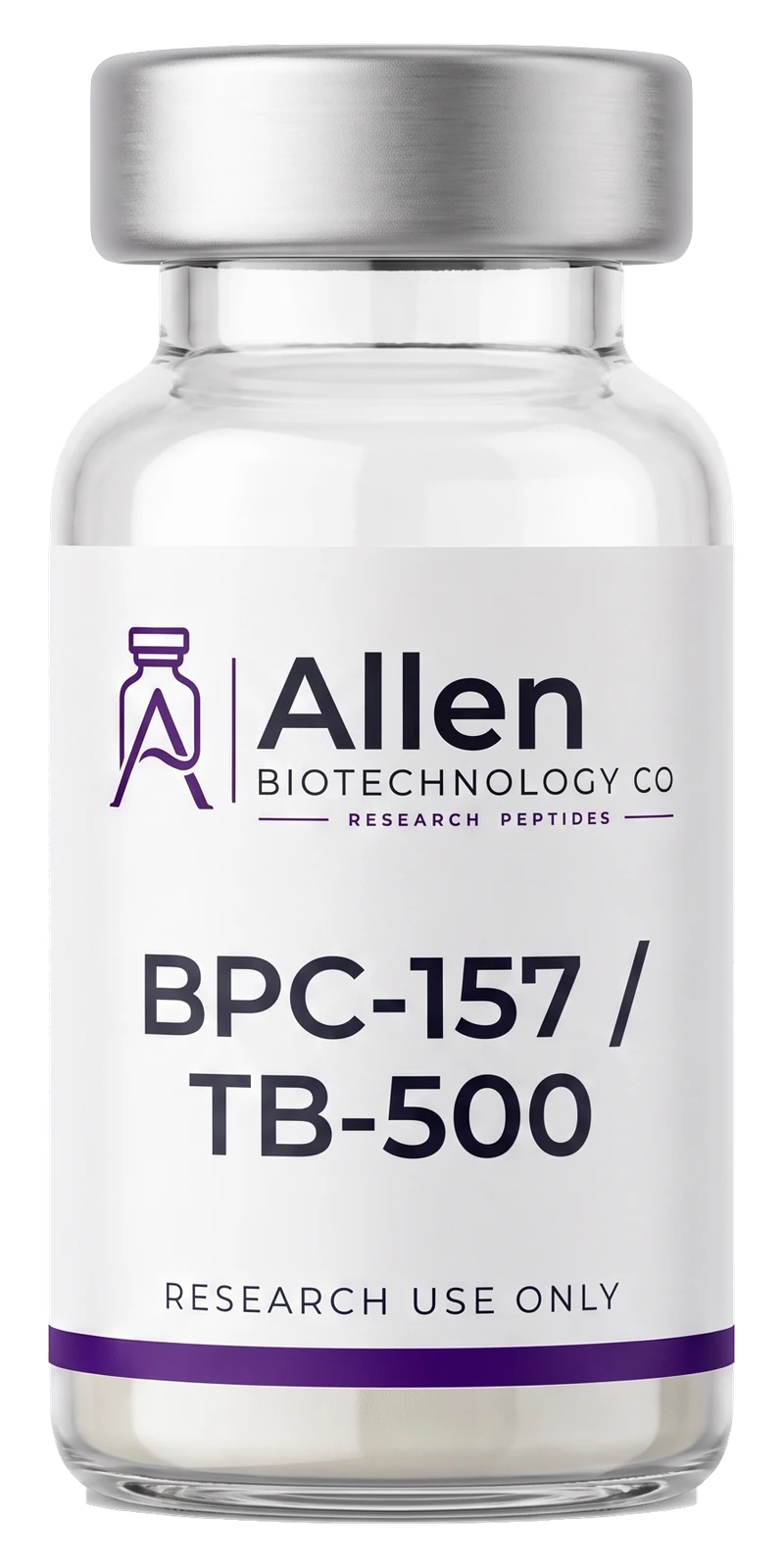
Combo Vial: BPC-157/TB-500
Available sizes: 10mg 20mg
10 vials per box
$110.00 – $170.00
Select options
No products match those filters.